Latest Judiciary Jobs and Court Recruitment in India
Explore recruitment opportunities in India's judicial institutions, including the Supreme Court of India, High Courts, District Courts and subordinate courts.
Judiciary recruitment includes positions for law graduates, administrative staff, clerks, stenographers, judicial officers, technical personnel and other support staff.
NaukriTrail provides recruitment information, eligibility requirements, important dates and links to official notifications.
Popular Judiciary and Court Jobs
Different judicial institutions recruit candidates for various positions, including:
Judicial Officers and Civil Judges: Judicial service positions filled through the applicable state or other prescribed recruitment processes.
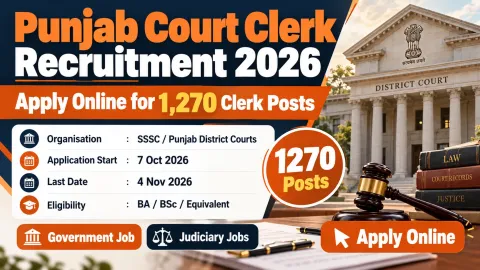
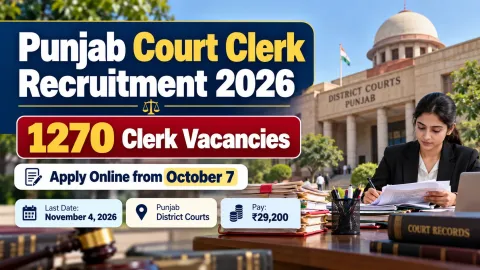
Court Clerks: Clerical and administrative duties, including documentation and record management.
Stenographers: Court transcription, shorthand, typing and related administrative responsibilities.
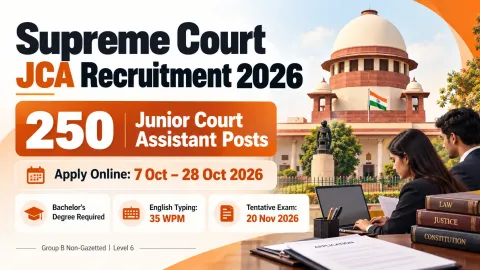
Junior Judicial Assistants: Administrative and clerical support in judicial institutions.
Personal Assistants: Secretarial and administrative support to judicial officers and court officials.
Court Masters: Courtroom coordination, records and related responsibilities.
Process Servers: Delivery of court notices, summons and other official documents.
Court Attendants: General support duties within judicial institutions.
Technical and IT Staff: Computer operations, software, networking and technical assistance.
Judiciary Jobs Eligibility
Eligibility depends on the recruiting court, position and applicable recruitment rules.
Common requirements may include:
Class 10 or 12: Certain attendant, support and clerical positions.
Graduation: Various administrative, clerical and assistant positions.
LL.B. Degree: Many judicial service and law-related positions.
Typing and Shorthand Skills: Certain clerk, stenographer and personal assistant positions.
Computer Knowledge: Relevant administrative and technical vacancies.
Professional Qualifications: Specialised technical, accounting or other posts.
Candidates should check the official notification for age limits, eligibility, experience requirements and reservation provisions.
Judiciary Recruitment Selection Process
Depending on the position, recruitment may involve:
Preliminary or screening examination.
Main written examination.
Typing, shorthand or computer skill test.
Interview or viva voce, where applicable.
Document verification.
Medical examination, if required.
The stages and examination patterns vary between courts and recruitment authorities.
High Court and District Court Recruitment
High Courts and District Courts across India periodically announce recruitment for administrative, judicial and technical positions.
Candidates can explore vacancies based on the recruiting institution, state, educational qualification and application deadline.
Judicial service examinations may be administered by a High Court, a State Public Service Commission or another designated authority, depending on the jurisdiction.
How to Apply for Judiciary Jobs
Browse the latest Judiciary Jobs listed on NaukriTrail.
Select a recruitment matching your qualifications and interests.
Review the eligibility criteria, vacancies and important dates.
Read the official recruitment notification carefully.
Visit the recruiting court's or designated authority's official website.
Complete the prescribed application process before the deadline.
Frequently Asked Questions
What are judiciary jobs?
Judiciary jobs include judicial, administrative, clerical, technical and support positions in courts and other judicial institutions.
Can graduates apply for court jobs?
Yes. Many court clerk, assistant and administrative positions accept graduates, subject to additional requirements specified in the recruitment notification.
Is an LL.B. degree required for all judiciary jobs?
No. A law degree is generally required for judicial service and certain legal positions, but many clerical, administrative and technical vacancies have different educational requirements.
How can I become a Civil Judge in India?
Candidates generally need to meet the applicable judicial service recruitment requirements, including the prescribed law qualification and any experience conditions. Selection procedures vary by state and recruitment authority.
Where can I find official court recruitment notifications?
Visit the official website of the recruiting Supreme Court, High Court, District Court or designated recruitment authority. NaukriTrail also provides links to official recruitment notifications in individual job articles.